Beyond CFM - Better Kitchen Air by Design
A specifier’s guide to effective kitchen ventilation

For years, rangehood selection has often come down to one number: How many cubic metres per hour does it extract?
But today's homes are different. Residential buildings are becoming more airtight, open-plan kitchens are increasingly connected to living spaces, and Indoor Air Quality (IAQ) is gaining greater attention in residential design.
As a result, airflow alone no longer tells the whole story. For architects, builders, designers and specifiers, the more important question is: How effectively will the rangehood capture and remove cooking emissions under real-world conditions?
Cooking is a significant source of indoor air pollution
Cooking generates a mixture of airborne emissions including particulate matter, ultrafine particles, volatile organic compounds (VOCs) and moisture.

The type and quantity vary with the cooking method, temperature, oils and appliance, but the principle remains the same: the closer emissions are captured to their source, the less opportunity they have to spread through the home.
This is why source capture should be a primary consideration in kitchen ventilation design.
Airflow alone doesn't define performance
A high airflow rating doesn't automatically translate into effective pollutant removal. Real-world performance depends on the entire system, including:
- Canopy geometry and capture area
- Cooktop size and mounting height
- Motor characteristics
- Duct diameter, length and bends
- Installation quality
- System resistance and building pressure
- Make-up air
- Cooking behaviour
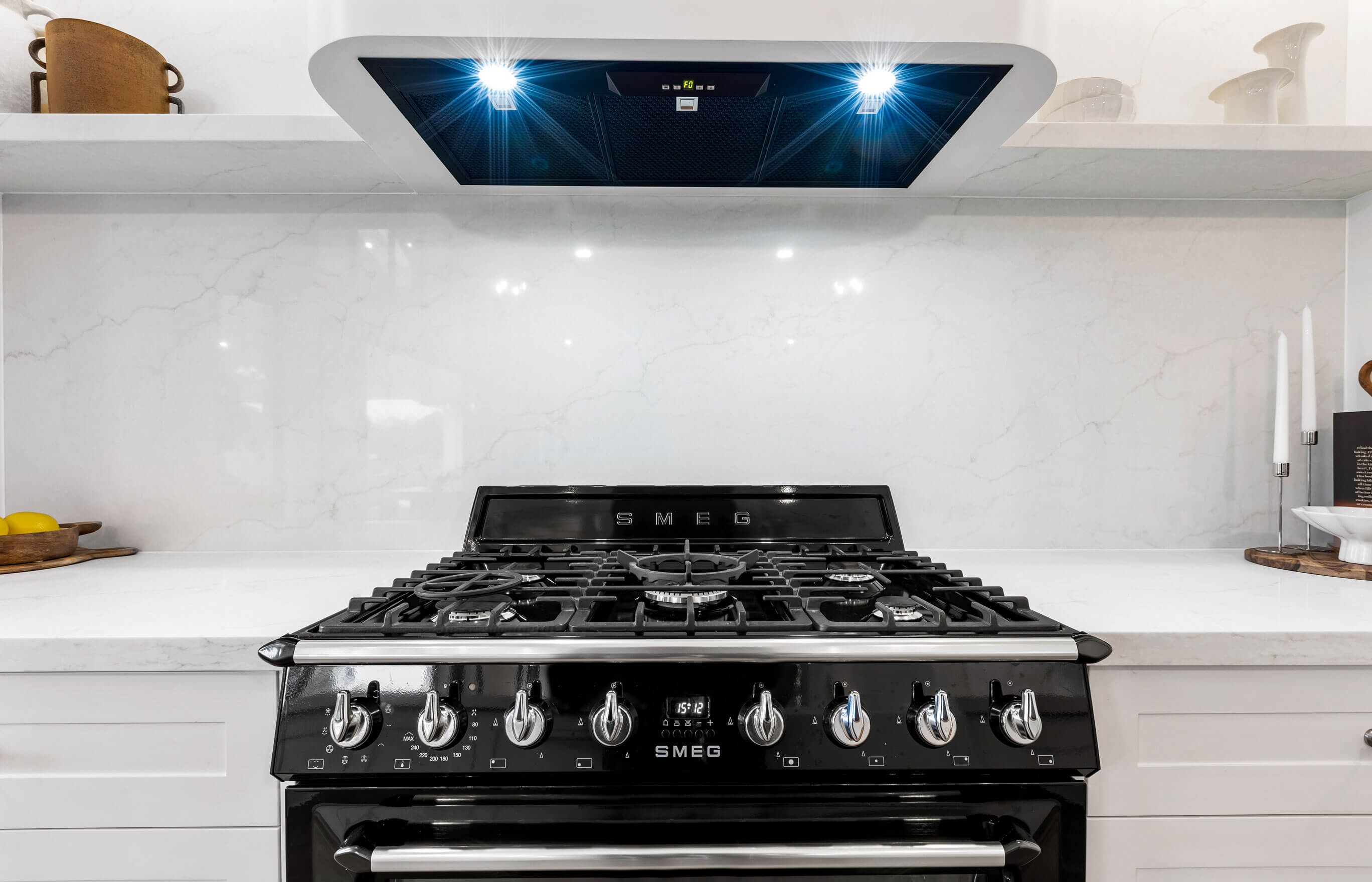
This is why comparing rangehoods purely on advertised m³/h can be misleading. Two systems with similar nominal airflow can deliver very different results once installed in different kitchens, with different duct runs and different building conditions.
Capture matters more than airflow
The purpose of a kitchen ventilation system isn't simply to move air - it's to capture cooking emissions before they disperse into occupied spaces.
In open-plan kitchens, cooking plumes are influenced by cross-drafts, air-conditioning, ceiling fans, occupant movement and hood design. Once emissions escape the capture zone, increasing airflow alone may not recover them. Effective ventilation depends on both airflow and capture efficiency.
Induction still requires effective extraction
Although induction cooking eliminates combustion emissions associated with gas, it doesn't eliminate cooking emissions. Frying, searing and high-temperature cooking still generate particles, VOCs and moisture regardless of the heat source.
Effective extraction remains essential in both gas and induction kitchens.
Airtight homes require better ventilation design
Modern homes are built to reduce uncontrolled air leakage, improving energy efficiency but increasing reliance on mechanical ventilation.
When a rangehood exhausts air, replacement air must enter the home. In airtight buildings, inadequate make-up air can affect pressure conditions and reduce extraction performance. For this reason, rangehoods should be specified as part of the home's overall ventilation strategy - not as standalone appliances.
Duct design matters
The airflow shown on a specification sheet isn't necessarily what the installed system delivers. Poorly designed ductwork can significantly reduce performance. Consider the complete air path:
Duct diameter → duct length → bends → transitions → termination → external resistance
An appropriately sized, low-resistance duct system is just as important as selecting the right rangehood.
Quiet systems are used more often
Noise isn't simply a comfort issue - it's a performance issue. If a rangehood is excessively noisy, occupants are less likely to use it consistently or at the correct speed.
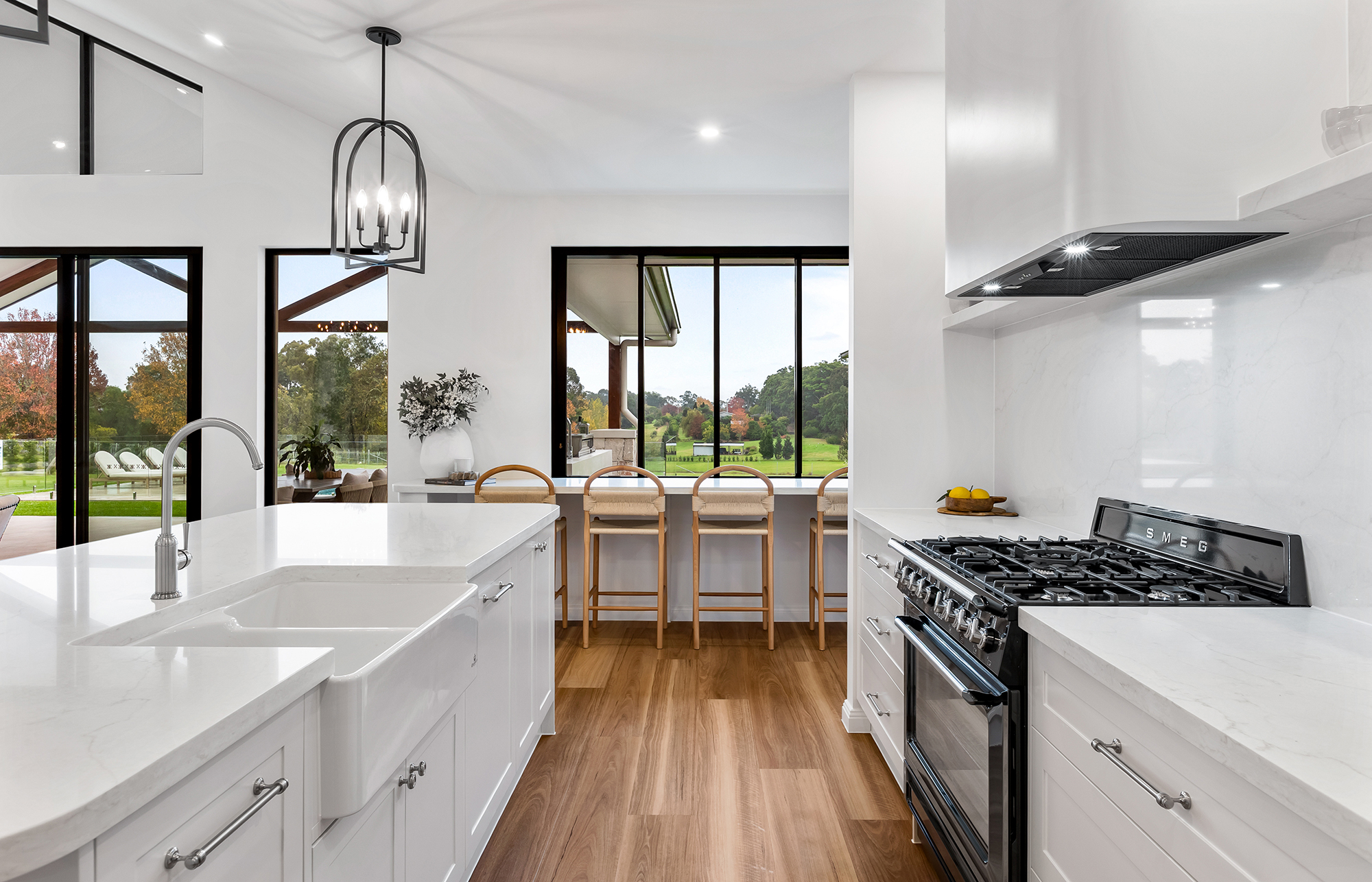
The ultimate goal isn't simply to specify a powerful rangehood. It's to specify one that occupants will actually enjoy using.
A better approach to specification
Rather than selecting a rangehood primarily on maximum airflow, consider the complete ventilation system:
- Can the hood effectively contain cooking plumes from the selected cooktop?
- Does the installed airflow meet the application’s requirements?
- Is the duct system correctly designed to minimise resistance?
- Has make-up air and building pressure been considered?
- Will installation deliver the intended design performance?
- Will the system operate quietly enough for regular use?
This shifts the focus from appliance selection to ventilation system design.
The future of kitchen ventilation
As homes become more airtight and kitchens increasingly merge with living spaces, ventilation should be considered part of a home's overall environmental performance.
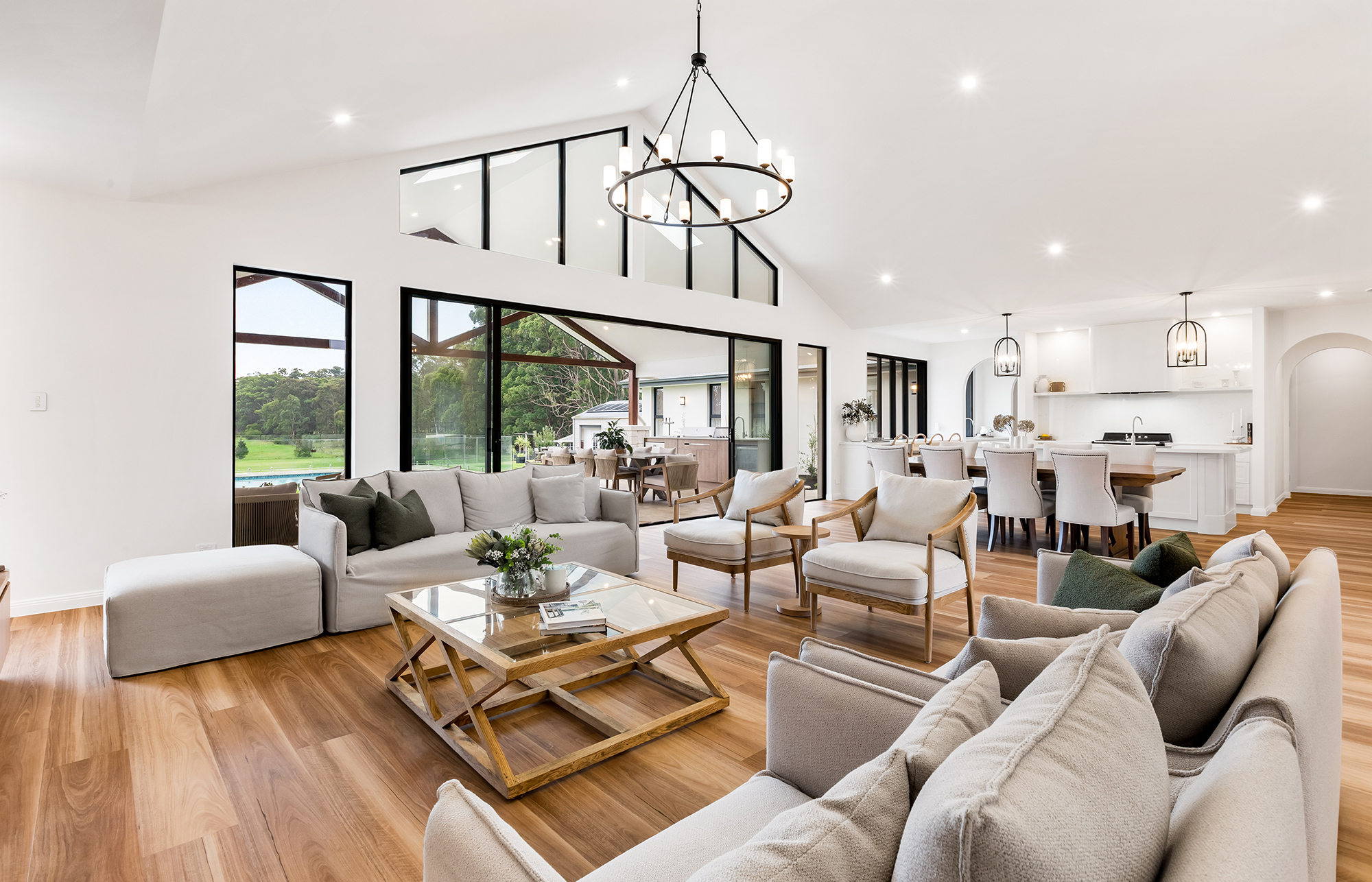
The best kitchen ventilation system combines effective capture, efficient extraction and quality ducting - while operating quietly and performing as intended once installed. Because effective kitchen ventilation isn't simply about moving more air - it's about controlling where cooking emissions go.
Read more about Indoor Air Quality and check out this Silent Rangehood Buying Guide to help pick the perfect one for your clients today. For more information, reach out to a Schweigen Product Expert at 1300 881 693 or sales@schweigen.com.au for a free project consult.